Germany
The Foundations: Bread and Potatoes
At the heart of the German diet are two staples: Brot (bread) and Kartoffeln (potatoes).
- Bread Culture: Germany boasts over 300 varieties of bread and 1,200 types of rolls. It is so central that the traditional evening meal is called Abendbrot ("evening bread"), typically consisting of high-quality slices topped with cold cuts, cheese, or pickles.
- The Versatile Potato: Introduced later in history, the potato became a national favorite, with the average German consuming about 56–65 kilograms annually. It appears in countless forms, from Kartoffelsalat (potato salad) to Bratkartoffeln (fried potatoes).
Iconic Traditional Dishes
Traditional German cooking focuses on comfort and "home-cooked" flavors.
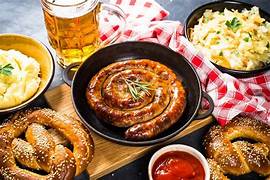
- Wurst (Sausage): With over 1,500 varieties, sausages like Bratwurst and Munich’s Weisswurst (white sausage) are cultural icons.
- Schnitzel: A thin, breaded, and fried meat cutlet (usually pork or veal) that remains a menu staple nationwide.
- Sauerbraten: A pot roast, typically beef, marinated for days in vinegar and spices to create a distinct sweet-and-sour flavor.
- Regional Stars: In the south, you'll find Spätzle (egg noodles), while the north features Fischbrötchen (fresh fish sandwiches) from the Baltic and North Seas.
Modern Trends: Street Food and Plant-Based Shifts
Today, Germany's food scene is as international as it is traditional.
- The Döner Kebab: Often cited as the most popular street food in the country, this Turkish-inspired dish has been adapted into a uniquely German fast-food staple.
- Currywurst: A post-war Berlin invention consisting of sliced sausage topped with a curry-spiced ketchup.
- Sustainability & Vegourmets: Germany has one of the highest rates of plant-based food consumption globally. Many traditional restaurants now offer "New German" cuisine—lighter versions of classics or creative vegetarian alternatives.
From the ritual of Kaffee und Kuchen (afternoon coffee and cake) to the festive stalls of a Christmas Market serving Glühwein and Lebkuchen, food in Germany is a celebration of both deep-rooted history and evolving tastes.
France
The Pillars: Bread, Cheese, and Wine
The French diet is built on three essential elements that appear at almost every meal.
- Boulangerie (Bakery): The baguette is the national icon, often bought fresh daily and served as a staple accompaniment. Breakfast is typically light, featuring buttery pastries like croissants or pain au chocolat.
- Fromage (Cheese): With over 500 unique varieties, cheese is a course in its own right, usually served between the main dish and dessert. Famous types include Camembert, Brie, and the pungent Munster.
- Vin (Wine): Wine is considered a quintessential beverage, with selection often dictated by the local region's terroir—reds from Bordeaux or Burgundy, whites from Alsace, and cider in Normandy.
A Tour of Regional Specialties
French food is highly diverse, with each region claiming its own "hero" dishes.
- North & East: Known for butter-based cooking and Germanic influences. Quiche Lorraine and Choucroute Garnie (sauerkraut with sausage) are staples here.
- South (Provence & Mediterranean): Features lighter flavors like olive oil, garlic, and herbs. Iconic dishes include Ratatouille (vegetable stew) and Bouillabaisse (seafood soup from Marseille).
- Central & Southwest: Famous for rich, "stick-to-your-ribs" meals. Boeuf Bourguignon (beef stewed in wine), Coq au Vin, and the hearty bean-and-meat Cassoulet are celebrated traditions.
- Garden-to-Plate: Leading culinary institutions like École Ducasse now emphasize plant-based creativity and "zero-waste" philosophies.
- Lighter Profiles: The "Nouvelle Cuisine" influence continues to evolve, replacing heavy sauces with concentrated broths and highlighting natural ingredient flavors.
- The North: Here, butter and lard often replace olive oil. You’ll find rich Risotto, creamy Polenta, and stuffed pastas like Tortellini in regions like Emilia-Romagna, often called Italy’s culinary heart.
- The Center: This is the land of roasted meats and pecorino cheese. Tuscany is famous for its Bistecca alla Fiorentina, while Rome is the birthplace of the "Big Four" pastas: Carbonara, Amatriciana, Gricia, and Cacio e Pepe.
- The South: The "soul" of Italian food, defined by olive oil, tomatoes, and dried pasta. This is where Pizza Napoletana was born and where seafood-heavy dishes like Spaghetti alle Vongole dominate the coast.
- Pasta: There are over 350 different shapes of pasta, each designed to hold a specific type of sauce (e.g., ridges for meat sauce, flat surfaces for cream).
- Olive Oil: Known as "Liquid Gold," extra virgin olive oil is the backbone of the Italian kitchen, used for both cooking and finishing dishes.
- Formaggio: From the "King of Cheeses," Parmigiano Reggiano, to the creamy Buffalo Mozzarella, cheese is an essential seasoning rather than just a topping.
- Antipasto: Small bites like bruschetta or cured meats.
- Primo: A starch course (pasta, risotto, or soup).
- Secondo: The protein (meat or fish).
- Dolce: A sweet finish, like Tiramisù or Gelato, followed by a shot of espresso.
Modern Trends: Gastronomy 2026
As of 2026, French cuisine is undergoing a shift toward sustainability and conscious eating.

Italy
The Regional Identity
Italy did not unify as a country until 1861, and its food remains fiercely regional.
The "Golden Trio": Pasta, Oil, and Cheese
Dining Culture: The Ritual
In Italy, food is a social glue. A traditional meal follows a strict order of courses:
Most Popular Foods in Europe
| Food | Country of Origin | Type |
|---|---|---|
| Pizza | Italy | Main Dish |
| Pasta | Italy | Main Dish |
| Paella | Spain | Rice Dish |
| Croissant | France | Pastry |
| Fish and Chips | United Kingdom | Fast Food |
| Schnitzel | Germany / Austria | Main Dish |
| Goulash | Hungary | Stew |
| Moussaka | Greece | Casserole |
| Pierogi | Poland | Dumplings |
| Risotto | Italy | Rice Dish |